
Managing Electronic Component Obsolescence: Strategies for Avoiding Production Delays
Electronic components don’t last forever. Manufacturers discontinue parts, suppliers change product lines, and newer technologies replace older components. For companies that manufacture products for years, or even decades, electronic component obsolescence can become a serious supply chain and production challenge.
For OEMs and product manufacturers, the key isn’t simply reacting when a component becomes unavailable. Effective obsolescence management starts before a part becomes a problem.
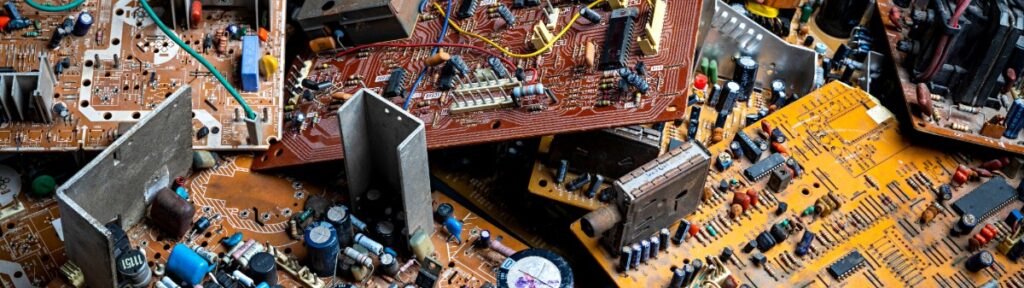
What Is Electronic Component Obsolescence?
Electronic component obsolescence occurs when a component used in a product is no longer available for purchase from the original manufacturer or becomes difficult to source.
A component may become obsolete because:
- The manufacturer has discontinued the product
- A semiconductor family has been replaced by a newer technology
- Production volumes are too low to justify continued manufacturing
- A manufacturer exits a particular product category
- Raw material or manufacturing processes change
- A component becomes difficult or impossible to source through authorized distributors
Even when a replacement part appears to have the same specifications, it may not be a true drop-in replacement.
Why Component Obsolescence Matters
A discontinued component can create problems far beyond purchasing.
If a critical component becomes unavailable, an OEM may need to:
- Redesign a PCB
- Requalify the product
- Modify firmware or software
- Update engineering documentation
- Repeat testing or certifications
- Purchase expensive last-time-buy inventory
- Delay production
- Find alternative suppliers
- Manage counterfeit or questionable components from unauthorized sources
For products with long service lives, these challenges can become particularly significant.
Don’t Wait Until a Part Is Discontinued
One of the most effective ways to manage component obsolescence is to identify potential risks early.
During the quoting, design, and production process, manufacturers can look at the components being used and identify parts that may create future supply problems.
Some warning signs include:
Single-source components: If only one manufacturer produces a critical component, there may be greater supply risk.
Older components: Components that have been on the market for many years may be approaching the end of their product lifecycle.
Limited distribution: If a component is becoming difficult to find through authorized distributors, it may warrant closer attention.
Long lead times: Increasing lead times can be an early indication of supply constraints.
Frequent substitutions: If distributors are repeatedly offering alternate parts, the original component may be becoming less readily available.
Design With Obsolescence in Mind
Obsolescence management can begin at the engineering stage.
When designing a new product, engineers can consider whether critical components have multiple sourcing options and whether equivalent alternatives are available.
Designing flexibility into a PCB can also make future component changes easier. Depending on the application, this might include selecting components with multiple approved sources or designing footprints that can accommodate compatible alternatives.
This doesn’t mean choosing components based solely on availability. Electrical performance, reliability, certifications, mechanical requirements, and cost still need to be considered.
The goal is to balance today’s requirements with the potential needs of tomorrow.
Maintain an Approved Component List
A well-maintained Bill of Materials (BOM) is one of the most valuable tools for managing component obsolescence.
For each component, manufacturers can track information such as:
- Manufacturer
- Manufacturer part number
- Approved substitutes
- Authorized distributors
- Lead time
- Lifecycle status
- Current pricing
- Minimum order quantities
- Last-time-buy information
Keeping this information current makes it much easier to respond when a component becomes unavailable.
It also helps engineering and purchasing teams make informed decisions rather than searching for alternatives after production has already been interrupted.
Qualify Alternatives Before You Need Them
When possible, identifying and qualifying alternate components before they are needed can significantly reduce disruption.
However, an alternate component should not automatically be considered interchangeable simply because it has similar specifications.
A replacement may require evaluation of:
- Electrical characteristics
- Physical dimensions
- Pin configuration
- Temperature ratings
- Tolerances
- Power requirements
- Firmware compatibility
- Regulatory requirements
- Reliability requirements
Depending on the product, the replacement may also require testing or customer approval before it can be introduced into production.
Work With Your Contract Manufacturer
Your contract manufacturer can be an important partner in managing component availability.
A PCB assembly provider may have visibility into:
- Distributor availability
- Lead-time changes
- Component substitutions
- Parts frequently becoming difficult to source
- Supplier changes
- Current market pricing
At PE Manufacturing, component availability can be considered as part of the PCB assembly process, not simply when an order is ready to be built.
When a potential sourcing issue is identified, working together with the OEM’s engineering and purchasing teams can help determine whether the appropriate solution is an alternate component, a last-time buy, inventory planning, or a redesign.
Need Help Managing Your PCB Assembly Supply Chain?
PE Manufacturing provides PCB assembly and manufacturing support for OEMs that need a reliable U.S. manufacturing partner.
Contact PE Manufacturing to discuss your next PCB assembly project or component sourcing challenge.